
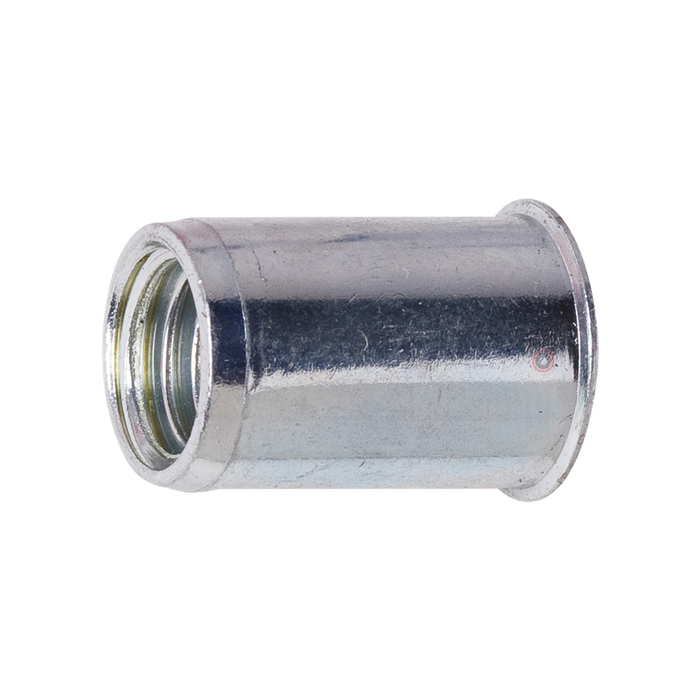
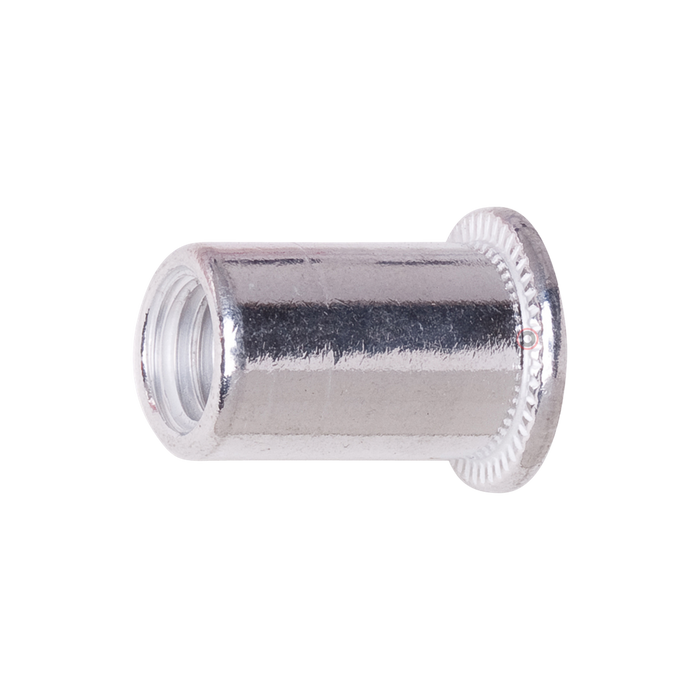
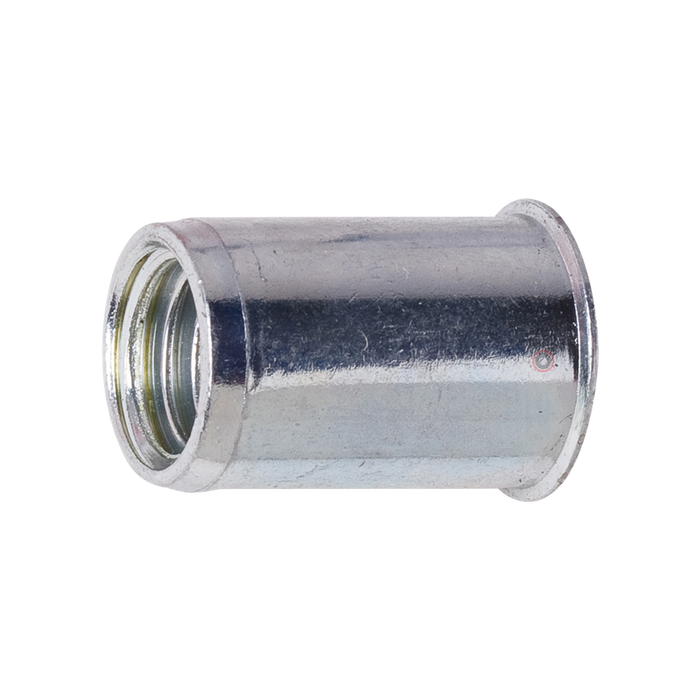
Rivnut - Small Diameter Body Rivet Nuts
Rivnuts are the lightweight rivet nut
These Rivnuts are ideal when seeking a flush finish or looking to drill a smaller size hole. At Aerobolt® we have a comprehensive range of Rivnuts, also known as rivet nuts in steel, stainless or aluminium in metric size threads M3, M4, M5, M6, M8, M10, M12 & imperial 3/16". 1/4", 5/16", & 3/8". This range forms part of Huck Aerobolt’s complete blind Nutserts & Rivnuts Collection featuring Hex Nutserts, Xtralok®, Plus Nuts, Jack Nuts, Well Nuts and other specialised threaded inserts. Check out the rivnut page.
Understanding Rivnuts
What Are Rivnuts?
Rivnuts offer a secure and reliable threaded fastening solution, particularly for thin materials where conventional tapping is impractical. Essentially, a rivnut combines the functions of a rivet and a nut into one convenient fastener.
Rivnuts are installed from one side of the material, making them ideal for blind-side applications where access to the rear of the workpiece is limited or impossible. Once installed, they create a permanent internal thread that can accept a bolt or machine screw.
These tubular fasteners are installed using a powered Rivnut gun or manual Rivnut tool. They are particularly useful in sheet metal, tubing and other thin materials where there is insufficient thickness to create a conventional tapped thread.
Rivnuts can be installed into correctly sized punched or drilled holes at various stages of the manufacturing process, including after painting or coating, provided the installation does not damage the finished surface.
At Aerobolt, we offer a comprehensive range of rivnuts in metric thread sizes M3, M4, M5, M6, M8, M10 and M12, along with selected imperial sizes. Our range includes round-body, smooth-body, knurled and hexagonal rivet nuts, as well as related blind threaded stud fasteners.
How Do Rivnuts Work?
Rivnuts are designed to create a strong, reusable internal thread in materials that are too thin to support conventional threaded fastening.
During installation, a specialised Rivnut tool pulls on the internal thread while applying pressure against the flange. This action compresses the rivnut body, causing it to expand behind the parent material and form a secure mechanical connection.
Once installed, the rivnut remains fixed in position, allowing bolts or machine screws to be inserted and removed without needing access to the back of the material.
How to Install Rivnuts
Installing rivnuts is relatively straightforward with the correct tools and a little practice. Before starting, ensure you have selected the appropriate rivnut for your material thickness, hole diameter and application.
Always refer to the manufacturer's technical data sheet for the correct hole size, grip range and installation settings. Where available, Aerobolt product data sheets can be found under the Resources tab on the relevant product page.
Step 1: Prepare the Hole
Drill or punch a hole to the diameter specified for your selected rivnut. Ensure the hole is clean, correctly sized and free from excessive burrs.
Step 2: Attach the Rivnut to the Tool
Thread the rivnut onto the mandrel of your Rivnut tool. Some powered tools feature an automatic loading or reverse function to make this process quicker and easier.
Step 3: Insert the Rivnut
Place the rivnut into the prepared hole, ensuring the flange sits firmly against the surface of the material.
Step 4: Activate the Tool
Operate the Rivnut tool according to the manufacturer's instructions. The tool pulls on the rivnut's internal thread, compressing the body and causing it to expand behind the material.
This creates a secure mechanical grip between the front flange and the expanded section on the blind side.
Step 5: Remove the Tool
Once the rivnut is correctly installed, release the tool and unthread the mandrel. Depending on the tool, this may happen automatically or require manual operation.
Step 6: Inspect the Installation
Check that the rivnut is seated correctly, securely attached and free from visible damage. The internal thread should remain suitable for accepting the intended bolt or machine screw.
Your rivnut is now installed and ready for use!
Rivnuts or Nutserts? They're Both Rivet Nuts!
Rivnuts and Nutserts are commonly used terms for the same general type of fastener, known as a rivet nut.
The term rivet nut is the generic name for these internally threaded blind fasteners. However, some of the names commonly used in the industry originated as registered trademarks.
For example, Nutsert® is a registered trademark associated with Stanley Engineered Fastening, while Rivnut® is a registered trademark associated with Böllhoff.
Over time, these brand names have become widely used throughout the fastening industry to describe rivet nuts in general, regardless of the manufacturer.
Whether you call them rivnuts, nutserts or rivet nuts, their primary purpose remains the same: creating a secure threaded fastening point where conventional nuts or tapped threads may not be practical.
Components of a Rivnut
A typical rivnut consists of several important features that contribute to its performance.
Body: The main tubular section of the rivnut, which contains the internal thread. During installation, part of the body compresses and expands behind the parent material to create a secure mechanical connection.
Flange: The wider rim at the front of the rivnut that rests against the surface of the material. The flange helps prevent the fastener from being pulled through the installation hole.
Body Surface: Rivnuts are available with different body designs, including smooth, knurled and hexagonal profiles. These variations influence grip, resistance to rotation and suitability for different materials.
How to Install a Rivnut Without a Tool
Although it is possible to install some rivnuts using improvised methods involving bolts, nuts and washers, achieving a consistent and reliable installation can be difficult without the correct equipment.
Improper installation may damage the rivnut's internal thread, deform the parent material or prevent the fastener from achieving its intended grip.
While there are numerous online videos demonstrating alternative installation methods, Aerobolt recommends using a purpose-designed Rivnut tool for consistent results and a professional finish.
How to Remove a Rivnut
Removing an installed rivnut is not always straightforward. Rivnuts are designed to remain permanently attached to the parent material, so removal generally involves destroying the fastener.
Care must be taken to avoid damaging the surrounding surface, particularly when working with thin sheet metal or finished panels.
Important: Before attempting removal, confirm that the rivnut is not part of a structural, load-bearing or safety-critical assembly. If you're unsure, consult the equipment manufacturer or a qualified repairer before proceeding.
For suitable non-structural applications, carefully drilling away the rivnut's head is a common removal method.
Tools and Equipment:
-
Electric drill and suitable metal drill bit
-
Long-nose pliers or an appropriate extraction tool
-
Safety glasses and other appropriate personal protective equipment
Step 1: Prepare the Work Area
Ensure the workpiece is securely supported and the surrounding area is protected from damage. Wear appropriate eye protection and check for any components, wiring or other obstructions behind the rivnut.
Step 2: Drill the Rivnut Head
Using a suitable drill bit, carefully drill into the centre of the rivnut head at a controlled speed. The aim is to remove the head without enlarging or damaging the original installation hole.
Step 3: Remove the Remaining Rivnut Body
Once the head has been removed, the remaining rivnut body can often be pushed through the hole or carefully extracted, depending on access and the surrounding assembly.
Step 4: Inspect the Hole
Check the original hole for damage, distortion or enlargement before installing a replacement rivnut.
If the hole has been damaged, seek advice on the appropriate repair or replacement fastening method.
Types of Rivnuts
At Aerobolt, we offer a comprehensive range of rivnuts and related threaded inserts to suit different materials, installation requirements and applications.
Open-End Rivnuts
Open-end rivnuts have an opening at the blind end, allowing a suitably sized bolt or machine screw to pass through the threaded section where sufficient clearance is available.
They are widely used in general fabrication, automotive assembly and sheet metal applications.
Closed-End Rivnuts
Closed-end rivnuts feature an enclosed blind end, helping prevent moisture, dust and debris from passing through the threaded opening.
They are suitable for applications where additional protection against contamination is required. Where a watertight seal is necessary, the complete fastening assembly must be assessed for sealing performance.
Knurled Rivnuts
Knurled rivnuts feature ridges along the body that improve grip and resistance to rotation in suitable parent materials.
These are among the popular rivet nut options in Aerobolt's range, particularly for applications requiring additional resistance to spin-out.
Smooth-Body Rivnuts
Smooth-body rivnuts have a plain cylindrical body and are commonly used in thin sheet metal applications where relatively low assembly torque is required.
Their compact body design can make them particularly useful where smaller installation holes or limited edge distances are important.
Hexagonal Rivnuts
Hexagonal rivnuts feature a six-sided body designed to fit into a correctly sized hexagonal hole.
This design provides excellent resistance to rotation, making hexagonal rivnuts a popular choice for applications requiring higher torque resistance.
Threaded Studs
Blind threaded studs, sometimes called Rivstuds, operate on a similar installation principle to rivnuts. However, instead of providing an internal thread, they feature a protruding external thread.
These fasteners are useful where components need to be secured using a nut rather than a bolt.
Rivnut Applications
Rivnuts are widely used across automotive, aerospace, construction, manufacturing and general engineering industries.
Common applications include attaching brackets, securing panels, mounting equipment, installing enclosures and fastening components to thin sheet metal or hollow sections.
They are particularly useful in repair and maintenance work, as well as applications where access to the back of the material is restricted.
Their ability to provide a reusable threaded connection makes them a practical alternative to conventional nuts, welded nuts and tapped holes in many applications.
For structural, safety-critical or other demanding applications, the fastening system must be selected and verified against the appropriate engineering requirements.
How Strong Are Rivnuts?
Rivnuts can provide excellent fastening strength when correctly selected and installed. However, their performance depends on several factors, including fastener material, thread size, body design, parent material and installation quality.
Understanding these factors is essential when selecting the correct rivnut for your application.
Factors Affecting Rivnut Strength
1. Rivnut Material
The material used to manufacture a rivnut influences its mechanical strength, corrosion resistance and suitability for different applications.
Steel Rivnuts: Generally offer good strength and durability, making suitable grades an excellent choice for demanding industrial and engineering applications.
Stainless Steel Rivnuts: Provide excellent corrosion resistance alongside good mechanical strength. They are particularly useful in environments exposed to moisture, chemicals or harsh weather conditions.
Aluminium Rivnuts: Lightweight and corrosion-resistant, aluminium rivnuts are commonly used where lower weight and moderate fastening loads are important. They generally have lower mechanical strength than comparable steel fasteners.
Actual strength varies according to the fastener's material grade, dimensions and design.
2. Thread Size
Rivnuts are available in numerous thread sizes to suit different fastening requirements.
Larger thread sizes can accommodate larger bolts, but thread size alone does not determine the strength of the installed rivnut.
Other important considerations include thread engagement, rivnut body design, parent material strength and the loads applied to the fastening assembly.
3. Parent Material
The thickness, strength and type of material into which a rivnut is installed can significantly influence its holding capacity.
Steel and Aluminium Sheet: Common installation materials that can provide reliable fastening performance when the correct rivnut and grip range are selected.
Plastic and Thin Materials: May require specialised rivnut designs to accommodate material deformation and prevent pull-through or damage during installation.
Always ensure the selected rivnut is suitable for the thickness and mechanical properties of the parent material.
4. Installation Quality
Correct installation is critical to achieving reliable rivnut performance.
The installation hole must be correctly sized, the rivnut must suit the material thickness, and the tool must be set according to the manufacturer's instructions.
Incorrect installation can lead to problems such as rivnut spin-out, reduced pull-out resistance, damaged threads or deformation of the parent material.
How Is Rivnut Strength Measured?
Rivnut performance is commonly evaluated through several mechanical characteristics, including pull-out strength, shear performance, spin-out resistance and torque capacity.
Understanding these measurements can help you compare different rivnut designs and select a suitable fastener for your application.
Pull-Out Strength
Pull-out strength refers to the force required to pull an installed rivnut from the parent material or cause failure of the threaded connection under specified test conditions.
Pull-out resistance depends on the rivnut design, parent material thickness and strength, installation hole dimensions and installation quality.
Shear Strength
Shear strength describes resistance to forces acting parallel to the joined surfaces.
The shear performance of a fastening assembly depends on several factors, including the rivnut, mating bolt, parent material and overall joint design.
Some manufacturers publish shear test results for individual fasteners rather than complete bolted assemblies, so it is important to understand exactly what has been tested.
Spin-Out Resistance
Spin-out resistance measures the torque required to cause an installed rivnut to rotate within its mounting hole.
Correct hole preparation, rivnut body design and installation quality are essential considerations for applications requiring good resistance to rotation.
Knurled and hexagonal rivnut designs can provide improved spin-out resistance in suitable materials and installation conditions.
Torque Performance
Torque performance relates to the rivnut's ability to withstand tightening forces without damaging the internal threads or compromising the fastening assembly.
Different rivnut materials, body designs and installation methods have different torque limitations.
Always follow the manufacturer's recommended installation settings and assembly torque specifications.
Rivnut Load Ratings and Applications
Rivnuts are commonly used for securing brackets, panels, enclosures and other components in automotive, manufacturing, construction and general engineering applications.
However, there is no single load rating that applies to all rivnuts of the same thread size.
Published strength figures may represent laboratory test results obtained under specific conditions. These figures should not automatically be treated as allowable working loads for every application.
When selecting rivnuts for applications involving significant loads, vibration or repeated mechanical stress, always refer to the manufacturer's technical data for the exact fastener being used.
For structural, load-bearing or safety-critical applications, consult the fastener supplier or a qualified engineer to confirm the suitability of the fastening system, installation requirements and appropriate design safety factors.
At Aerobolt, we offer a comprehensive range of rivnuts, nutserts and specialised threaded inserts to suit a wide variety of industrial and commercial applications.
Need assistance choosing the right rivnut for your application? Contact our team for product selection assistance, technical information and installation advice.
 (60+)