

Which Rivet Gun Is Best For Me?
Selecting the right rivet gun depends on several factors, with the most important consideration being your riveting application. There are hundreds of rivet tools on the market, and choosing the right one can be challenging.
At Aerobolt®, we have the technical expertise to guide you through the selection process. We offer a comprehensive range of professional rivet guns from leading manufacturers, including Pop®, Makita®, Far®, Masterfix® and Gesipa®, along with alternative options that we have lab-tested for quality and value.
We continually test and re-test riveting tools before bringing them to market, so don't leave your tool selection to a coin toss. When you buy from Aerobolt®, you can be confident you're purchasing a quality rivet gun that is fit for purpose.
In this beginner's guide, we'll review air rivet guns and cordless rivet guns, along with a brief look at manual riveters. We'll also explain important technical specifications, including setting force, stroke length and other features that can make your next riveting project easier.
You'll find easy-to-understand comparison tables covering the different options, along with a frequently asked questions section addressing common enquiries from our customers.
Having trouble with your existing rivet gun? Read our blog on repairing your rivet gun for helpful advice.
What are the main types of rivet guns?
There are three main rivet tool power categories: air, cordless and manual. Selecting the right category depends on your application, how frequently you install rivets and your installation volume.
Air rivet guns.
Air riveting tools are often a compact, lightweight option that delivers the pulling force required for demanding applications. They are particularly suitable for high-production workshops where fast, continuous operation and consistent results are essential.
These tools are also known as pneumatic rivet guns or hydro-pneumatic rivet guns. To keep things simple, we'll refer to them as air rivet guns throughout this article.
Pros: Air rivet guns are a fast, efficient option that requires minimal physical effort. Many professional models feature rivet suction and holding capabilities, meaning the tool holds the rivet in place while you align it with the hole. After installation, some models automatically extract the spent mandrel (waste pin) into a collection bottle. This eliminates the need to tilt the gun backwards to release the pin, making repetitive riveting tasks easier and faster.
Cons: Air rivet guns require an air compressor, which can limit mobility. Choosing the correct air compressor is important, so read our guide to selecting the right air compressor for more information.

Manual rivet-tools.
For the occasional installation of rivets, or where power is not available, manual rivet-tools are cost-effective and easy to use. These tools work by inserting the rivet mandrel into the nosepiece and squeezing the handles to set the rivet. There are numerous different types of hand rivet-tools, including the popular Pop® T55 Rivet-Tool, (pic. on the right), which is a plier rivet type tool. This means you hold one handle whilst pushing the other handle. There is also a long handle lever type option this is where you apply equal pressure on both handles and push them together. This option assists in providing the extra leverage required with larger diameter rivets or when installing stainless-steel rivets.
Pros. an inexpensive option, easy to use and ideal for the DIY gurus.
Cons: They require muscle force.

Cordless rivet guns.
Cordless rivet guns means they run on battery power and provide versatility that allows you to install rivets from practically anywhere. This makes the cordless rivet gun option ideal for building sites. Easy to use and similar to air rivet gun, simply point-and-shoot.
Pros: Excellent mobility, convenient operation and no need for an air compressor or air hose.
Cons: Cordless rivet guns can have a higher initial cost than manual or some pneumatic models, and battery runtime is limited. Pulling force, installation speed and handling features vary between tools.
Some cordless rivet guns include rivet-holding mechanisms. For example, the Makita DRV250 cordless rivet gun features a mechanical rivet-retaining mechanism in the nose cone and a transparent container for collecting spent mandrels.
Mechanical rivet retention is different from pneumatic vacuum suction, while a mandrel collection container does not necessarily mean the tool automatically extracts broken mandrels.
Always compare the rivet-holding method, spent-mandrel handling, setting capacity, weight and battery runtime of the specific model before purchasing.

How do I select the right rivet gun?
Once you've decided between air, cordless and manual power options, there are several additional factors to consider.
-
Rivet type: Are you installing standard blind rivets or structural rivets, such as Huck® Magna-Lok® rivets?
-
Rivet material: Not all rivet guns are suitable for every material. Check whether the tool supports aluminium, steel and stainless-steel rivets.
-
Rivet diameter: Make sure the rivet gun supports the diameter of the rivets you intend to install.
-
Setting force: The tool must deliver sufficient pulling force for the rivet type, material and diameter. For high-volume installations, also consider the tool's operating speed and cycle time.
-
Stroke length: A longer stroke can allow certain rivets to be installed in a single trigger cycle rather than requiring two pulls. This is particularly important when installing longer rivets.
-
Rivet holding and retention: Some pneumatic rivet guns use vacuum suction to hold the rivet in place during positioning, while certain cordless models feature a mechanical retaining mechanism in the nosepiece. Both can make rivet positioning easier, but they operate differently.
-
Spent-mandrel handling: Some rivet guns automatically extract broken mandrels into a collection container, while others require an additional action to release or collect them. Check the manufacturer's specifications to understand how each model handles spent mandrels.
- Other considerations: Weight, dimensions, tool shape, ergonomics and price should also influence your decision.
When considering tool shape, Aerobolt offers several alternatives to traditional rivet gun designs. Some pistol-style rivet guns feature a separate air barrel and head configuration, creating a more manageable and lightweight tool. Alternatively, an in-line, pencil-shaped rivet gun can be suspended above a workbench, making it particularly suitable for repetitive assembly applications.
How Does Rivet Holding and Spent-Mandrel Extraction Work?
Rivet-holding features help keep a rivet securely positioned in the tool's nosepiece while the operator aligns it with the installation hole. Some professional pneumatic rivet guns use vacuum suction, while certain cordless rivet guns use mechanical retention.
For example, the Makita DRV250 cordless rivet gun features a rivet-retaining mechanism that holds the rivet in the nose cone, making positioning easier, including when working at different angles.
Spent-mandrel handling is a separate feature. Some professional rivet guns automatically extract the broken mandrel into a collection container after installation. Other models collect spent mandrels using a different release or disposal process.
When comparing rivet guns, check these features individually rather than assuming that all cordless or pneumatic models operate in the same way.
Which is the best air rivet gun for standard blind rivets?
There are several pop rivet air guns to select; if you are installing large volumes of standard type rivets, the Far® RAC 171 should be your first option for an easy to use tool with a fast cycle time and the capacity to hold the rivet whilst working and automatic pin extraction. This tool is renowned for its reliability, power, and so much more. For low volume rivet installations, the RT-50's rivet-tool series have become popular due to their price point and reliability. *NB this rivet gun doesn't have the rivet holding capacity nor the automatic pin extraction feature that make riveting easier and will find with the professional Far® RAC rivet gun range.
| AIR RIVET GUNS FOR STANDARD BLIND RIVETS (Eg. Multi-grip rivets, Open end pop rivets, Closed end or Sealed rivets etc) |
|||||||
| Rivet Gun Model | Weight (Kg) | Dims. L x H (mm) | Force (kN) | Stroke (mm) | Rivet Type | Dia. Size (mm) | Price Approx. |
RT-50's * See above |
1.3 | 265 x 230 | 7.0 | 14 | Standard Rivets | 2.4, 3.2, 4.0 & 4.8 | $120 |
RT-RAC83  |
1.7 | 200 x 220 | 5.4 | 19 | Standard Rivets | 2.4, 3.2, 4.0, 4.8* * Alu. only |
$400 |
RT-RAC182 |
1.7 | 295 x 278 | 10.5 | 20.5 | Standard & Structural Rivets | 2.4, 3.2, 4.0, 4.8 | $985 |
RT-RAC171  |
2.8 | 325 x 340 | 17.3 | 25.5 | Standard & Structural Rivets | 4.8, 6.4, 7.8* | $1450 |
RT-GT3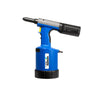
|
1.9 | 312 X 317 | 14.0 | 25 | Standard & Structural Rivets | 3.2, 4.0, 4.8, 6.4 | $2300 |
Which are the best cordless rivet guns for standard rivets?
When working on construction sites, cordless rivets guns are sometimes worth their weight in gold. Here at Aerobolt, we have a comprehensive range of battery-powered tools including the popular Gesipa® PowerBird® that can effortlessly install both 4.8- & 6.4-mm rivets in all material, as well as the well regarded award-winning Pop® 2500 Cordless, or the entry level CQ80025 cordless gun. The CQ80025 is ideal if you are seeking a cordless rivet gun for the first time and the European options seem a little on the expensive side. This tool has proven popular with many of our customers for it's reliability and its capabilities. A recent positive 5 star review sums up nicely the tool's attributes. Click here to read more. (scroll to the bottom of the CQ80025 product page)
| CORDLESS RIVET GUNS | |||||||
| Rivet Gun Model | Weight (Kg) | Dims. L x H (mm) | Force (kN) | Stroke (mm) | Rivet Type | Dia. Size (mm) | Price Approx. |
RT-CQ80025
 |
2.1 | 270 x 290 | 15.0 | 27 | Standard | 3.2, 4.0, 4.8 & 6.4 | $460 |
RT-PB2500
 |
1.7 | 320 x 240 | 8.5 | 25 | Standard & Structural | 2.4, 3.2, 4.0 & 4.8 | $1600 |
RT-PB3400
 |
2.4 | 336 x 275 | 18.0 | 30 | Standard & Structural | 4.8 & 6.4 | $2000 |
RT-GPBRT8PROG
 |
2.1 | 280 x 290 | 20.0 | 25 | Standard & Structural | 2.4, 3.2, 4.8 & 6.4 | $2500 |
Which are the best air rivet guns for structural rivets?
Structural rivets and structural rivet tools are core products at Aerobolt. We recommend the Far® range of rivet guns. The Far® brand rivet gun RT-RAC171 installs rivet diameter 4.8 & 6.4mm (3/16" & 1/4") structural rivets + general purpose pop rivets. It can also install 7.7/7.8mm aluminium bulb type rivets. Listed below a few other Far® options. Aerobolt® has lab tested a few other riveters that install both pop rivets and structural rivet types and unfortunately their performance has been less than satisfactory.
| RIVET GUNS FOR STRUCTURAL RIVETS AND GENERAL PURPOSE POP RIVETS. | |||||||
| Rivet Gun Model | Weight (Kg) | Dims. L x H (mm) | Force (kN) | Stroke (mm) | Rivet Type | Dia. Size (mm) | Price Approx. |
| RT-RAC182 |
1.7 | 295 x 278 | 10.5 | 20.5 | Standard & Structural | 2.4, 3.2, 4.0, 4.8 | $985 |
| RT-RAC171 |
2.8 | 325 x 340 | 17.3 | 25.5 | Standard & Structural | 4.8, 6.4, 7.8* | $1450 |
RT-RAC172  |
2.8 | 325 x 340 | 22.7 | 19.5 | Structural | 6.4, 7.9* | $1600 |
RT-3000  |
Gun: 1.5 Pump: 7.1 |
430 x 205 | 21.6 | 28.0 | Standard & Structural | 4.8, 6.4, 7.9* | $3000 |
Which are the best rivet tools for Structural Rivets & Huck Bolts?
When installing Huck bolts (pin & collar lock bolts) and structural rivets; there are a few options to review. Consider the HG-LH224 and the HG-FHU05 or the popular Huck® Makita® Cordless Gun. These Huck bolt & structural rivet guns are renowned for their quality and reliability.
| STRUCTURAL RIVET & HUCK BOLT GUNS | |||||||
| Rivet Gun Model | Weight (Kg) | Dims. L x H (mm) | Force (kN) | Stroke (mm) | Type | Dia. Size (mm) | Price Approx. |
HG-FHU05  |
2.4 | 240 x 340 | 22.7 | 19.5 | Structural | 4.8, 6.4 & (7.9 Rivets) | $1400 |
HG-LH224  |
2.8 | 275 x 322 | 19.0 | 21 | Structural | 4.8, 6.4 | $1900 |
HG-BV4500AUS |
2.5 | 358 incl. nose x 285 | 20.0 | 30 | Structural | 4.8 & 6.4 | $2700 |
HG-256  |
5.0 | 200 x 380 | 44.4 | 22.35 | Structural | 7.9, 9.5 | $8200 |
How to use an air rivet gun.
Using an air rivet gun is relatively straightforward once you understand the basic process.
Follow these steps for a typical blind rivet installation:
-
Select the correct rivet. Make sure you have the appropriate rivet type, material, diameter and length for your application.
-
Check the rivet gun. Ensure the gun is fitted with the correct nosepiece and jaws for the rivet being installed.
-
Prepare the materials. Align the materials to be joined and drill the required hole to the correct diameter.
-
Load the rivet. Insert the rivet mandrel (pin tail) into the nosepiece of the rivet gun, leaving the rivet body protruding.
-
Position the rivet. Insert the rivet body fully into the prepared hole, ensuring the rivet head sits flush against the material.
-
Set the rivet. Hold the gun square to the workpiece and squeeze the trigger. Continue until the mandrel breaks, often producing the familiar "pop" sound.
-
Collect the spent mandrel. Many professional rivet guns automatically transfer the broken mandrel into a built-in collection container.
-
Inspect the installation. Check that the rivet is properly seated and the materials are securely joined.
Congratulations, you've successfully installed your rivet!
Frequently Asked Rivet Gun Questions.
How Does an Air Rivet Gun Work?
An air rivet gun, also known as a pneumatic rivet gun, uses compressed air to generate the pulling force needed to install a blind rivet.
The tool grips the rivet's mandrel (pin) and pulls it through the rivet body. This causes the body to expand and form a secure joint between the materials being fastened.
In a typical hydro-pneumatic rivet gun, compressed air activates a piston and hydraulic mechanism that generates the required pulling force.
Here's a more detailed breakdown of the process:
-
Compressed air: The rivet gun is connected to an air compressor via a hose, supplying the power required to operate the tool.
-
Trigger activation: Pulling the trigger directs compressed air into the tool's internal mechanism.
-
Hydraulic pressure: In hydro-pneumatic models, the compressed air drives a piston that generates pressure within the hydraulic system.
-
Mandrel pulling: The jaw mechanism grips and retracts the rivet mandrel.
-
Rivet expansion: As the mandrel is pulled, the rivet body expands, forming a secure joint between the materials.
-
Mandrel break-off: Once the required installation force is reached, the mandrel breaks at its designated break point.
-
Reset: The rivet gun resets, ready for the next installation.
What's the difference between a cordless rivet guns and battery rivet-tool?
There is no difference. Both terms refer to the same type of tool. Cordless rivet guns are powered by rechargeable batteries and are also commonly called battery riveters or battery-powered riveting tools.
What is the CAS cordless battery system?
CAS (Cordless Alliance System) is a shared 18V lithium-ion battery platform designed to provide battery and charger compatibility across supported cordless tools from participating manufacturers.
For example, the Gesipa® PowerBird® Pro Gold cordless rivet gun uses the CAS battery platform, allowing it to share compatible batteries and chargers with other approved CAS tools.
This shared system can provide greater flexibility and help reduce the cost of maintaining multiple battery platforms, particularly for workshops operating several compatible cordless tools.
Battery runtime and charging performance vary depending on the battery's amp-hour (Ah) capacity, charger specifications, tool requirements and workload. CAS compatibility does not automatically guarantee longer battery life or faster charging than other lithium-ion systems.
Always confirm that the exact tool, battery and charger are compatible before purchasing. Learn more about the system at the official Cordless Alliance System website.
Does an air rivet-tool need servicing?
Yes. Regular maintenance is essential for maintaining the performance, reliability and lifespan of your rivet gun. Important components to inspect include the jaws, piston, seals and hydraulic oil system, where applicable. Proper maintenance helps ensure rivets are installed correctly and reduces the likelihood of unexpected tool failures.
Where can I get my rivet-tool serviced?
At Aerobolt®, repairing and servicing rivet guns is part of our commitment to providing a complete riveting solution. Our experienced team can service and repair a range of tools from manufacturers including Far®, Masterfix®, Pop®, Gesipa® and more. Visit our tool service and repair page for further information.
Do you hire rivet tools?
Yes, we do! Aerobolt® has more than 30 years of experience supplying rivet tool hire solutions to contractors and businesses across Australia. We offer flexible hire arrangements, including daily, weekly and monthly options, making it easier to access professional riveting equipment without purchasing a tool outright. Visit our tool hire page to explore the available options.
What's the difference between air rivet tool and pneumatic rivet tool?
There is no difference in the way these terms are commonly used. Air rivet tools, air-powered riveters and pneumatic rivet guns are all powered by compressed air. The term pneumatic originates from the Greek word pneumatikos, relating to air or breath.
Can you assist me in my rivets tool selection?
Absolutely! Our experienced technical team can help you select the right rivet gun based on your rivet type, material, installation volume and working environment. Call 02 9755 3747, contact us online or arrange an appointment at our premises.
Do you deliver rivet tools throughout Australia?
Yes, Aerobolt® delivers rivet tools Australia-wide through our network of courier companies. In Sydney, we offer same-day delivery for eligible orders placed before 10:00 am. Deliveries to major cities, including Melbourne and Brisbane, and many regional areas of south-eastern Australia may arrive the next day or within two business days, depending on the destination and delivery arrangements.
Do your rivet guns come with a 12-month warranty?
Yes, all our power rivet guns come with a 12-month warranty. We import a wide range of professional riveting tools from manufacturers around the world, and our Australian team is available to assist if any warranty or product issues arise.
Rivet Gun Selection Wrap-Up
Selecting the right rivet gun can make a significant difference to installation speed, consistency and reliability.
At Aerobolt®, we supply high-quality riveting tools from trusted manufacturers, including Pop®, Far®, Masterfix®, Gesipa® and Stanley®.
Whether you're looking to purchase a professional rivet gun outright or need a flexible short-term hire solution, our team is here to help.
Choosing the correct installation tool is just as important as selecting the right rivet. After all, the benefits of a quality fastener mean little if you're not using a rivet gun suited to the application.
In many cases, the best rivet gun is the one that can reliably handle your installation requirements and workload while making the job easier.
The tools featured in this guide represent just a small selection of the extensive range available throughout Australia and New Zealand. Many other excellent riveting tools are available from leading manufacturers.
At Aerobolt®, we combine expert technical advice with personal customer service to help you find the most suitable tooling for your application.
For assistance selecting the right rivet gun, call 02 9755 3747 to speak to our friendly, technically experienced team.
We're here to help you get the job done right.
 (60+)